 GlobeVerge
WORLD
GlobeVerge
WORLD
7,500 Quakes a Year — Why This One Turned Deadly
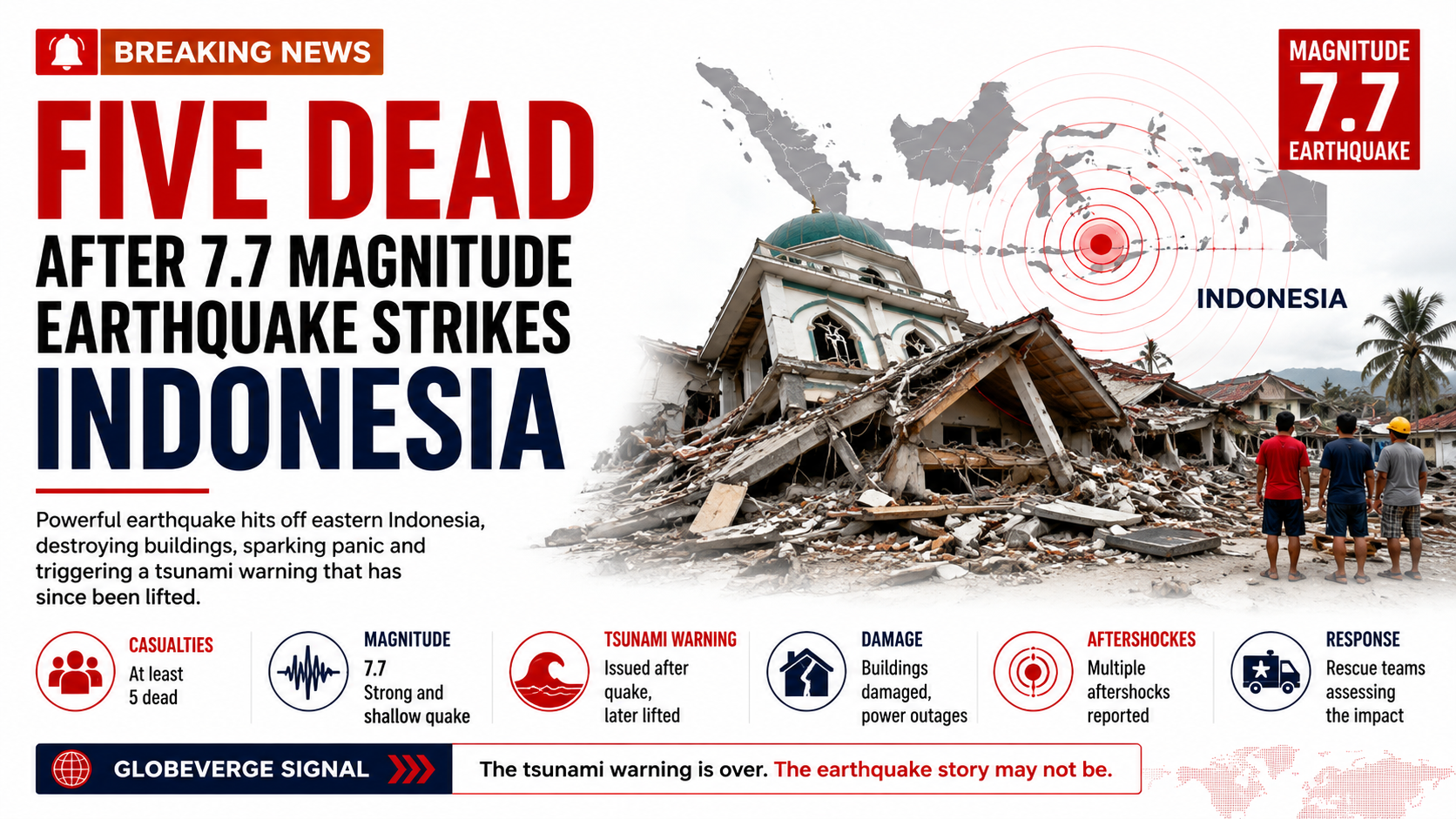
Indonesia lives on moving ground. It averages roughly 7,500 earthquakes a year — more than 20 every day. Most barely make headlines. This one did.
A powerful 7.7 earthquake struck shallow and offshore near Flores, killing at least five people, damaging buildings and forcing thousands from their homes.
The location carries painful history: a 1992 Flores earthquake and tsunami killed around 2,500 people.
This time, authorities issued a tsunami warning and residents evacuated. The warning was later lifted, avoiding the catastrophe many feared.
GlobeSignal
- Why it matters
- Magnitude isn’t everything. Depth, location, population, buildings and tsunami potential determine whether another Indonesian earthquake becomes a disaster.
- Most affected
- Flores communities — Residents face damaged homes, disrupted electricity and continued uncertainty as aftershocks test already weakened buildings. Coastal families — Thousands had to react quickly to the tsunami warning, reviving memories of Flores’ devastating 1992 disaster. Emergency teams — Rescue workers now face the difficult task of reaching damaged areas, checking buildings and establishing whether the initial casualty numbers tell the full story.
- Likely next
- Aftershocks — A strong secondary quake could cause additional damage to structures already weakened by the first shock. Casualty count — Early earthquake numbers frequently change as rescuers reach communities that were initially difficult to contact. Damage assessment — The next reports should reveal whether destruction is concentrated locally or spread across a wider part of Flores. Return home — With the tsunami warning lifted, the next question is how quickly displaced residents can safely return.