 GlobeVerge
WORLD
GlobeVerge
WORLD
Another Temple. Another Crowd. Another Tragedy India Has Seen Before.
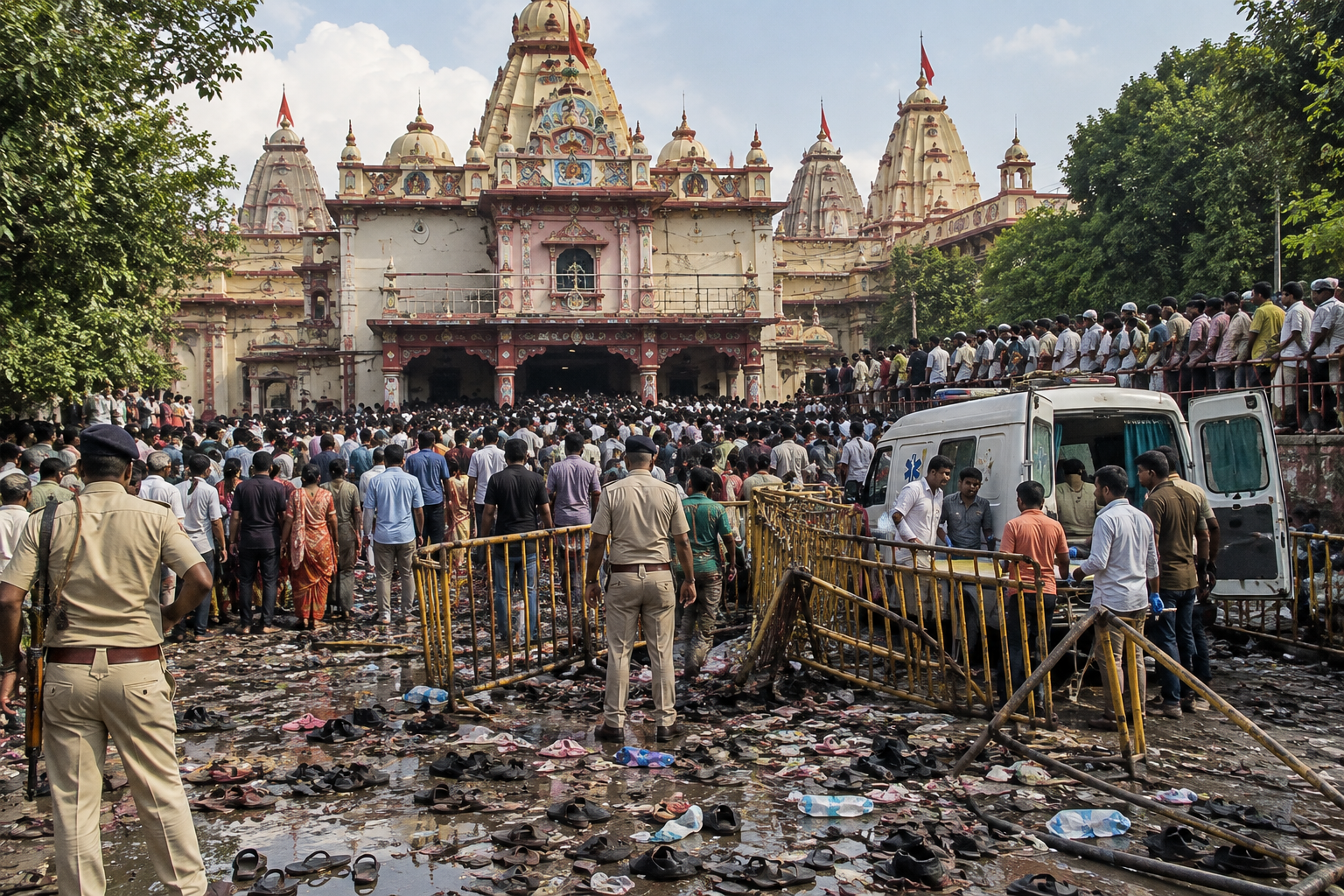
Seven people have been killed and more than a dozen injured after a crowded religious gathering near Bihar’s Ashok Dham Temple descended into panic.
But the bigger story isn’t just what happened today.
India has been here before — many times.
In 2024, the Hathras crowd disaster killed 121 people. In 2025, six people died near Tirupati after thousands gathered for temple visit passes.
Go further back and the numbers become even more disturbing.
115 people died near Ratangarh Temple in 2013. Around 250 were killed at Chamunda Devi Temple in 2008. More than 265 died at Maharashtra’s Mandhardevi Temple in 2005.
Different places. Different years. Different immediate triggers.
But frighteningly similar endings.
India hosts religious gatherings on a scale few countries in the world ever experience. Millions can move through temples, pilgrimage routes and temporary gathering areas within remarkably short periods.
That makes crowd management difficult.
But after decades of tragedies, it also raises a much harder question:
Should real-time crowd density monitoring, controlled entry, one-way pedestrian movement, protected emergency corridors and automatic capacity warnings now be mandatory at India’s biggest religious gatherings?
- Why it matters
- Decades of deadly incidents point to a recurring crowd-safety problem, not an isolated tragedy.
- Most affected
- Pilgrims and families attending India’s largest religious gatherings.
- Likely next
- Whether authorities move from investigations after disasters to technology-led prevention before crowds become dangerous.
More stories
- Langelihle Phili loving fast start at Kaizer Chiefs after Sundowns breakthrough
- MK Party and UAT in another urgent bid to revive impeachment inquiry against Cyril Ramaphosa
- India-Japan defence ties in focus as Rajnath, Koizumi to meet on August 20
- Ongole Municipal Corporation to mark 150th anniversary with series of events