 GlobeVerge
WORLD
GlobeVerge
WORLD
South Korea Won’t Follow Trump Into Iran — And It May Not Be the Last Ally to Say No
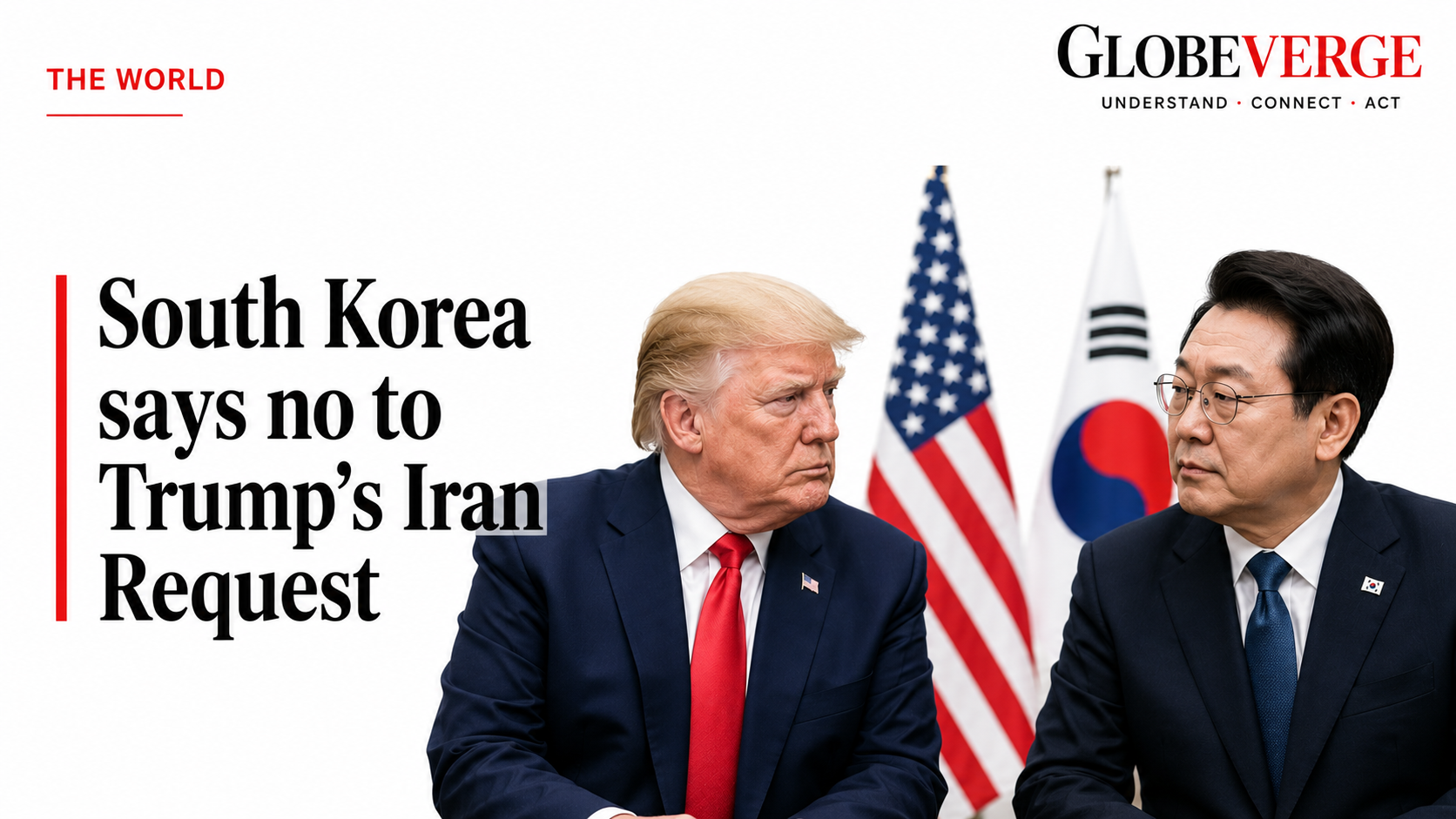
South Korea has declined Trump’s request to join U.S. efforts against Iran. Now the disagreement is spilling into the U.S.–South Korea security relationship — raising a much bigger question: how many of America’s partners are actually willing to follow Washington deeper into the Iran confrontation?
For the United States, this is not primarily a question of military capability.
America can fight Iran without South Korea.
The more uncomfortable issue is diplomatic.
Trump says South Korea rejected his request to participate in U.S. efforts against Iran with a simple:
“No thanks.”
Trump has also ordered a substantial reduction in joint U.S.–South Korean military exercises, while citing their cost and his desire for better relations with North Korea.
South Korea is not alone in showing reluctance toward deeper direct involvement in the Iran confrontation.
And that creates a question much bigger than one country’s decision:
What happens if America remains powerful enough to fight — but increasingly has to fight without many of its traditional allies beside it?
- Why it matters
- This looks less like a military setback for Trump than a diplomatic warning. American firepower remains enormous, but alliances multiply that power.
- Most affected
- United States — A prolonged confrontation becomes harder if Washington carries more of the military, financial and political burden. South Korea — A decision about Iran is now becoming entangled with a security relationship much closer to home. Other U.S. allies — They will be watching whether saying “no” in one region creates consequences in another.
- Likely next
- America still has the military power to fight Iran. The bigger test is whether it still has the diplomatic power to make its friends follow.