
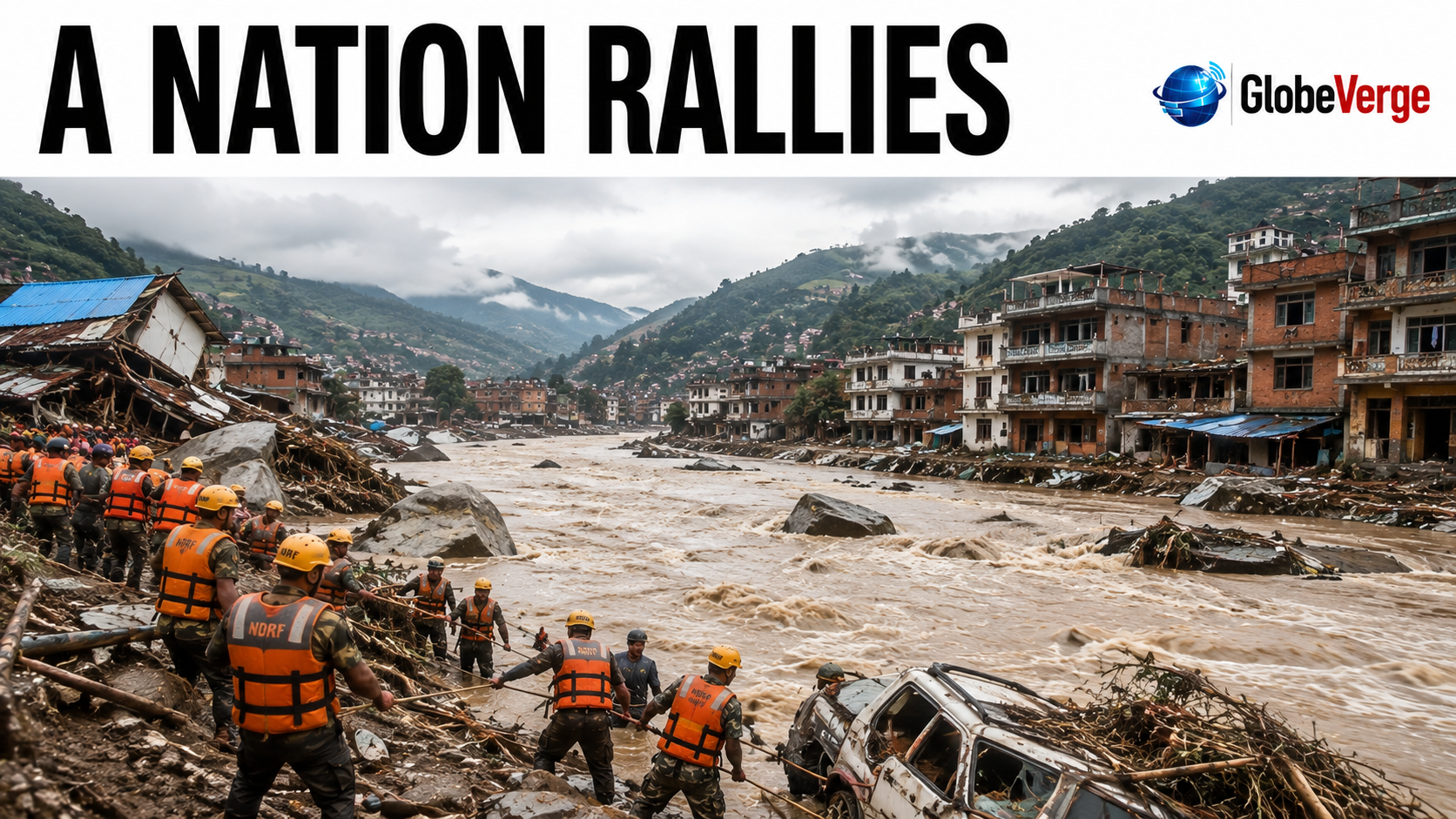
As communities began confronting the destruction left behind by severe flooding, the immediate priority was rescue and survival. But another challenge emerged almost immediately: how quickly could the country mobilise the money, equipment and supplies needed to support affected communities?
The response began within hours.
In the first six hours alone, NPR 273.3 million reached the Prime Minister’s Disaster Relief Fund, as banks, companies and institutions joined the national effort. Contributions continued beyond that initial surge, turning what began as emergency fundraising into a broader mobilisation across the country.
But the response has not been limited to money.
Businesses and organisations have stepped forward with equipment and essential supplies. Food, medicines, temporary shelter materials, generators, communications equipment and other resources are being mobilised as authorities work to reach communities affected by the flooding.
Government resources are also being directed toward rescue, relief and disaster management, while additional domestic and international assistance could become increasingly important once the full scale of the damage is understood.
And that is where Nepal’s next challenge begins.
Emergency funding can provide food, medical assistance and temporary shelter. It can support rescue operations and help families through the first difficult days. But rebuilding damaged roads, bridges, homes, businesses and public infrastructure is a much larger undertaking.
For people who have lost homes or livelihoods, recovery cannot be measured simply by how quickly the water disappears.
Families need somewhere to live. Transport connections have to be restored. Businesses need to reopen. Electricity and communications must return where services have been disrupted. Damaged infrastructure must be repaired, and some vulnerable communities may require longer-term rebuilding or relocation.
The impressive speed of Nepal’s early mobilisation therefore represents only the beginning.
Hundreds of millions of rupees arriving within hours demonstrates how quickly government, businesses and institutions can respond when a national emergency demands it. The harder question is what happens afterward.
Every contribution eventually has to become something tangible: a rescued family, a temporary home, a reopened road, a repaired bridge or a community able to function again.
That is the real race now taking place in Nepal.
The floodwaters will eventually recede. The headlines will move elsewhere. But for the communities left behind, recovery will continue long after the disaster itself disappears from view.
The water came quickly. Nepal responded quickly. Now begins the race after the flood.