Not because one extraordinary event has suddenly changed everything, but because too many important systems appear to be under pressure at once.
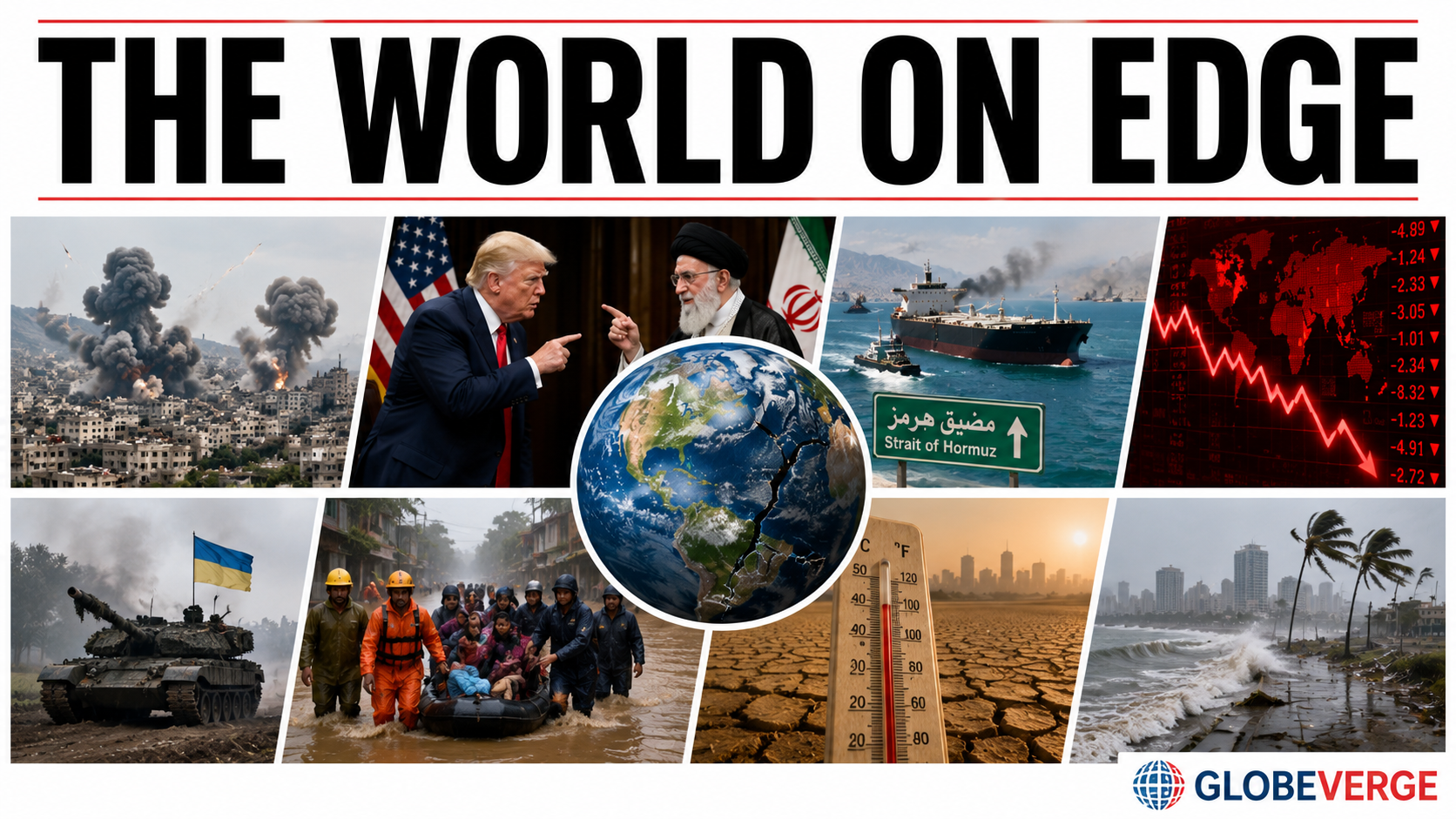
Military conflict is threatening one of the world’s most important energy corridors. Russia and Ukraine continue exchanging large-scale aerial attacks. Nepal is dealing with catastrophic flooding and thousands remain missing. A strengthening El Niño is raising fears of another wave of extreme weather. Meanwhile, financial markets are trying to calculate what all of this means for oil, inflation, interest rates and economic growth.
These aren’t isolated headlines anymore. They increasingly collide with one another.
When War Reaches Your Wallet
The Strait of Hormuz demonstrates how quickly a distant conflict can become everyone’s economic problem.
Renewed U.S.–Iran fighting has again put the waterway under pressure. Brent crude is trading around $95 a barrel, while shipping activity through the Strait has fallen sharply.
A disruption there doesn’t remain there.
Oil becomes more expensive, transportation costs rise, airlines pay more for fuel, manufacturers face higher expenses and governments worry about another inflation shock.
A missile launched in one part of the world can eventually appear in somebody else’s grocery bill.
Wars That Refuse to End
At the same time, Russia and Ukraine continue fighting an increasingly technological war dominated by missiles and drones.
The battlefield is no longer the only target. Energy facilities, cities, logistics networks and infrastructure have become part of the struggle.
That creates a different kind of global risk because modern economies depend on interconnected systems that can be disrupted far beyond traditional front lines.
Nature Is Adding Its Own Crisis
Then there are disasters that have nothing to do with geopolitics.
Nepal’s devastating floods have killed more than 1,250 people, while thousands remain unaccounted for. Roads and infrastructure have been destroyed, communities isolated and rescue teams are still searching for missing people.
At the same time, an unusually powerful El Niño is developing, increasing concern about future heat, drought, wildfire, flooding and disruption to food production across different parts of the planet.
Nature doesn’t wait for political crises to finish before creating another emergency.
Markets Are Learning to Live With Shock
Perhaps the strangest development is how quickly financial markets now absorb extraordinary events.
Oil jumps. Stocks fall. Investors reassess the danger. Then another technology rally or economic number arrives and markets move again.
Asian stocks were largely higher today even with oil around $95 and geopolitical tensions elevated.
That doesn’t necessarily mean investors believe the world is safe.
It may mean markets are becoming accustomed to operating while the world remains unstable.
And that itself is remarkable.
The Real Risk Is Connection
The biggest danger may not be any single crisis shown on a map.
It is the connection between them.
Conflict threatens energy. Higher energy prices threaten inflation. Inflation influences interest rates. Higher rates affect businesses and households. Extreme weather threatens agriculture and infrastructure. Damaged infrastructure disrupts supply chains.
One shock can travel through several systems before reaching people who live thousands of kilometres from where it began.
That is what makes today’s situation different from simply saying the world has always had wars and disasters.
The world has become extraordinarily connected—and therefore extraordinarily good at transmitting disruption.
There is also another side to that story.
Countries are building alternative energy routes. Businesses are diversifying suppliers. Governments are strengthening infrastructure. Technology is improving forecasting and disaster response. Markets continuously adapt.
The world is under pressure, but it is also learning how to function under pressure.
Perhaps that is the defining story of this moment.
Not that everything is collapsing.
Not that one enormous global crisis is coming.
But that war, climate, energy, economics and technology are increasingly interacting in real time—and the distance between a crisis somewhere and its consequences everywhere is becoming remarkably small.
The world isn’t stopping.
It is learning to operate on the edge.