
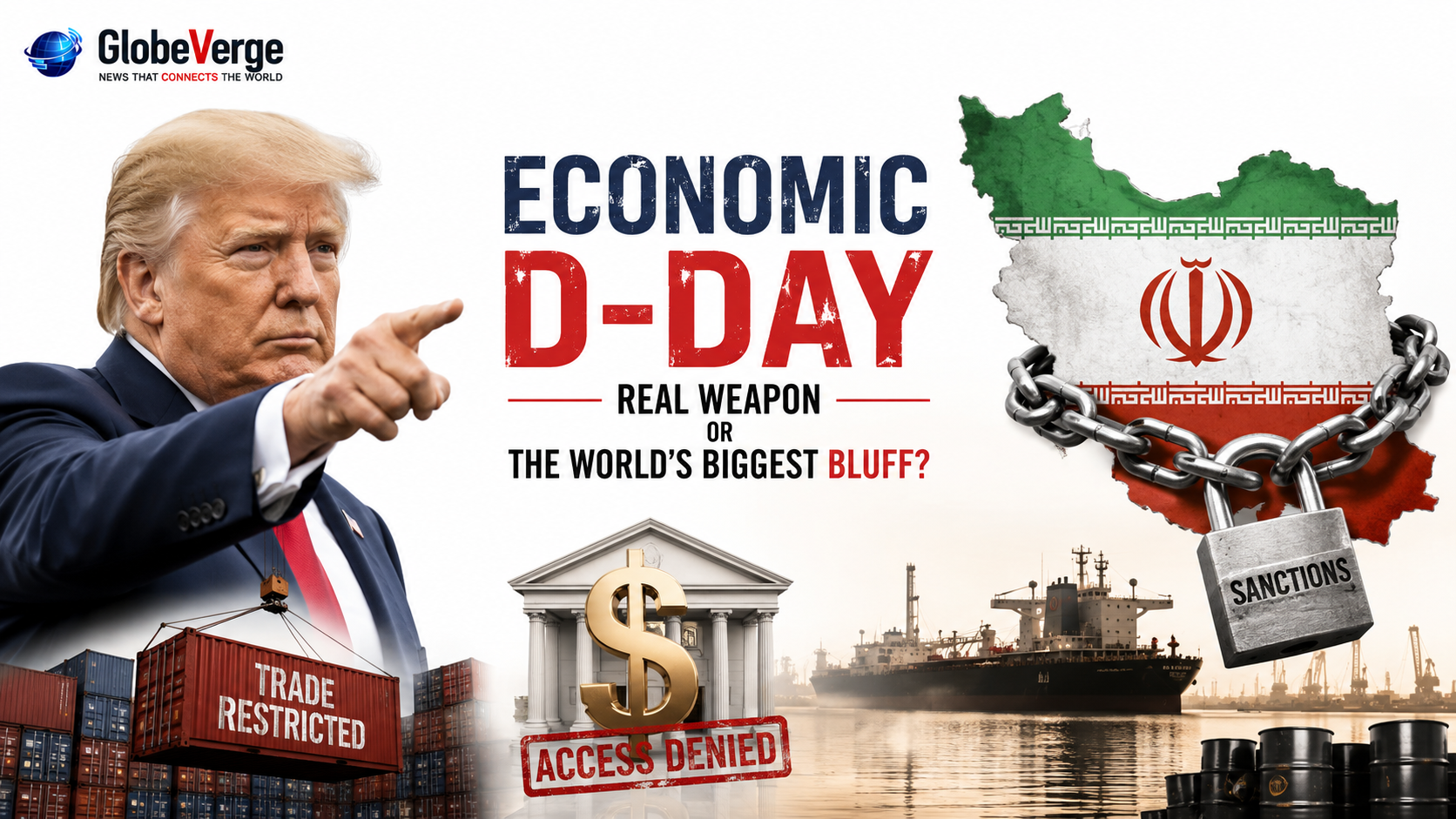
Money can be a weapon too.
Washington is preparing additional economic pressure on Iran, and the larger objective goes beyond restricting individual Iranian businesses. The strategy depends on making access to Iran increasingly expensive and risky for companies and financial institutions elsewhere.
It sounds devastating.
America sits at the centre of a financial network that much of international business still depends upon. The dollar dominates huge portions of global trade, while access to American banks, customers and capital markets is enormously valuable.
Put simply, Washington can confront a foreign company with an uncomfortable choice:
How important is your Iranian business compared with your access to America?
For many companies, the answer is obvious.
That is what gives American sanctions their extraordinary reach.
But Iran is not entering this confrontation for the first time.
Decades of restrictions have forced Tehran to learn how to survive around them. Oil can move through intermediaries. Payments can take indirect routes. Companies can change identities. Cargo can pass through complicated networks before reaching its final buyer.
Every additional restriction therefore creates another contest between enforcement and adaptation.
And one country could determine whether Trump’s latest pressure campaign becomes genuinely painful or merely creates another layer of obstacles.
China.
Iran can survive economic isolation much more easily if it continues finding buyers for its energy.
China’s enormous economy makes it exceptionally difficult to treat in the same way as a small country or an isolated company. Washington can threaten businesses involved in Iranian commerce, but aggressive enforcement against Chinese interests risks turning pressure on Tehran into a much broader economic confrontation.
That creates the central contradiction behind tonight’s announcement.
For the strategy to be powerful, Washington has to convince the world that ignoring it carries serious consequences.
But the more important the country that ignores it, the more expensive those consequences can become for America too.
Then there is oil.
Iran sits beside one of the most sensitive energy corridors on Earth. Any escalation affecting Gulf exports or shipping could quickly turn an American-Iranian confrontation into a problem for countries that have nothing to do with either government.
An Asian factory pays more for energy.
A European transport company faces higher fuel costs.
An African country importing petroleum spends more of its foreign currency on energy.
A Latin American airline sees operating costs rise.
The geography of the confrontation may be Middle Eastern.
The bill does not have to stay there.
This is why tonight’s sanctions should not be measured by the length of Washington’s announcement or the number of names placed on a list.
The real scorecard begins tomorrow.
Does Iranian oil become significantly harder to sell?
Do international banks retreat?
Do shipping companies change behaviour?
Do countries that disagree with Washington nevertheless comply because the financial risk is too great?
And above everything else:
What does China do?
If major buyers begin distancing themselves from Tehran, America’s economic weapon will have demonstrated formidable reach.
If Iranian trade continues through alternative channels with only limited disruption, the message could be very different.
And there is a third possibility.
The pressure works—but works too well.
A sharp reduction in Iranian exports or escalation around Gulf shipping could push energy prices higher, transferring part of the economic pain from Iran to consumers around the world.
That is the gamble behind economic warfare.
Sanctions appear cleaner than military action because there are no explosions on television.
Their consequences, however, travel quietly through currencies, shipping routes, commodity markets, factories and household budgets.
Trump is betting that America’s financial gravity remains powerful enough to make the world choose.
Iran is betting that its oil, geography and trading relationships give it enough room to resist.
China may possess enough economic weight to complicate both calculations.
So tonight is only the opening move.
America can announce the punishment.