
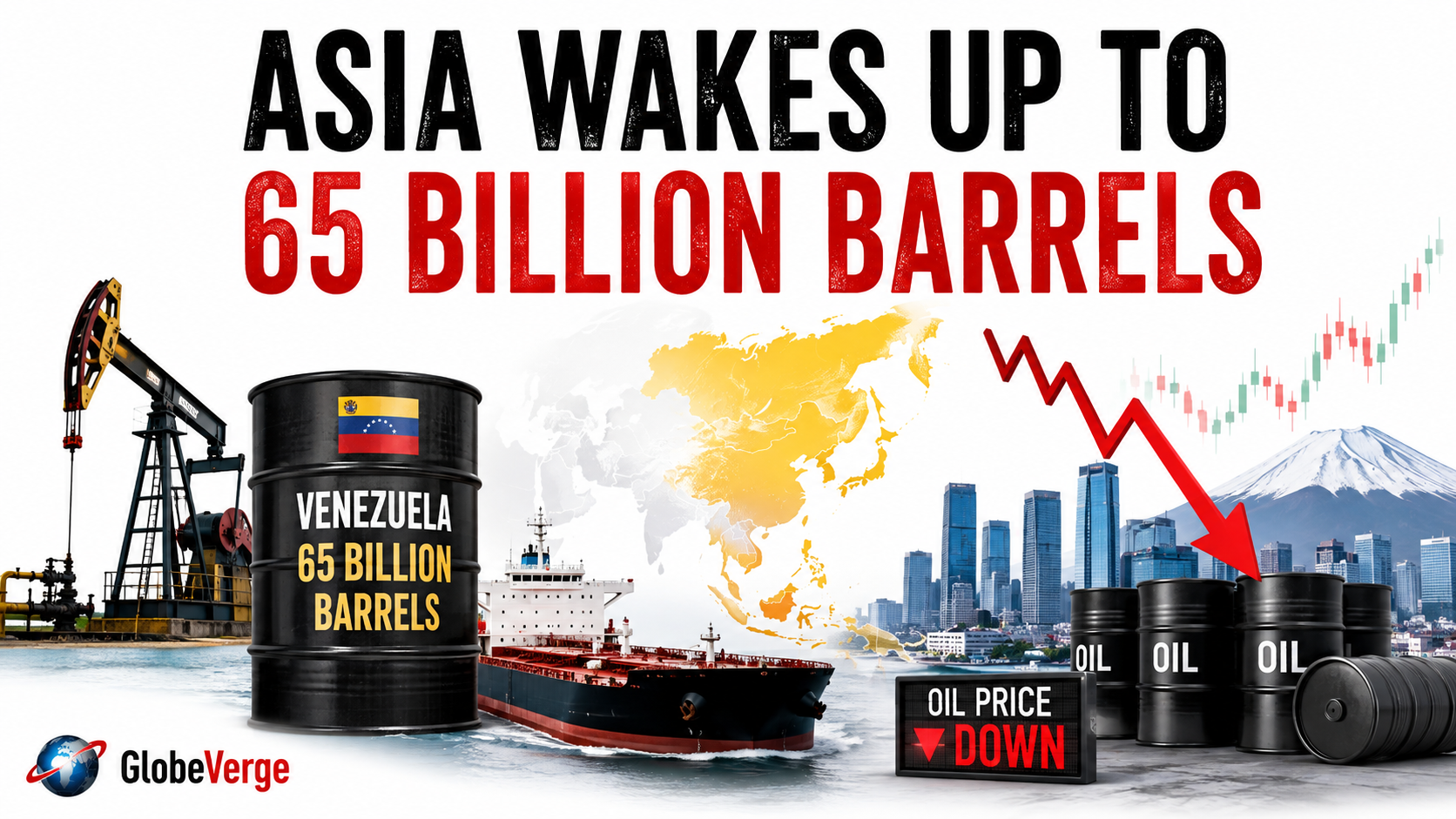
One of the weekend’s most consequential market stories is developing thousands of kilometres from Asia, beneath the enormous oilfields of Venezuela.
The United States says it has reached an arrangement involving majority control over more than 65 billion barrels of Venezuela’s proven oil reserves, with private companies expected to participate in developing the resources.
For financial markets, the immediate question isn’t political.
It is much simpler:
What happens to the price of oil?
Venezuela possesses some of the largest petroleum resources on Earth. If American investment, technology and access eventually help bring substantially more Venezuelan crude onto international markets, traders suddenly have another major source of future supply to consider.
Oil was already under pressure before the weekend as reports of expanding U.S. access to Venezuelan resources circulated.
Now comes the next test.
Asia opens first.
That matters because many of Asia’s largest economies are major energy importers.
India imports most of the crude oil it consumes. Japan and South Korea depend heavily on imported energy. Across the region, oil influences transportation costs, manufacturing, inflation, currencies and corporate margins.
If crude falls significantly when trading resumes, the market could quickly begin calculating the winners.
Airlines spend heavily on fuel.
Paint, chemical and plastics companies use petroleum-derived inputs.
Transport and logistics companies are exposed to diesel costs.
Lower crude can also ease inflation pressure and reduce the import bill of oil-dependent economies.
That creates the possibility of an unusual Monday combination:
Oil down. Inflation expectations down. Some Asian equities up.
India could be particularly interesting.
Lower crude is generally favourable for India’s macroeconomic position because it can reduce the country’s import burden and ease inflationary pressure. Airlines, paints, chemicals, logistics and other fuel-sensitive sectors could attract attention if oil falls sharply.
But this is not automatically a one-way trade.
There is an enormous difference between oil reserves underground and barrels entering the market tomorrow morning.
Venezuela’s energy infrastructure needs investment. Developing fields, restoring facilities and expanding production can take years. Traders therefore have to decide how much of this future supply deserves to be reflected in today’s oil price.
Energy producers could also move in the opposite direction from the broader market if investors anticipate lower crude prices.
And Venezuela isn’t the only force controlling oil.
The Middle East, the Strait of Hormuz, OPEC production decisions, global demand and geopolitical risk remain capable of overwhelming the Venezuela effect.
That is what makes Monday interesting.
The announcement doesn’t suddenly place 65 billion barrels of oil on tankers.
It changes the calculation of how much oil the world might eventually have access to.
For markets, expectations frequently move long before physical barrels do.
When Asian trading begins Monday morning, we will get the first major indication of how seriously investors are taking that possibility.
Venezuela made the announcement. Asia gets the first big chance to price it.