
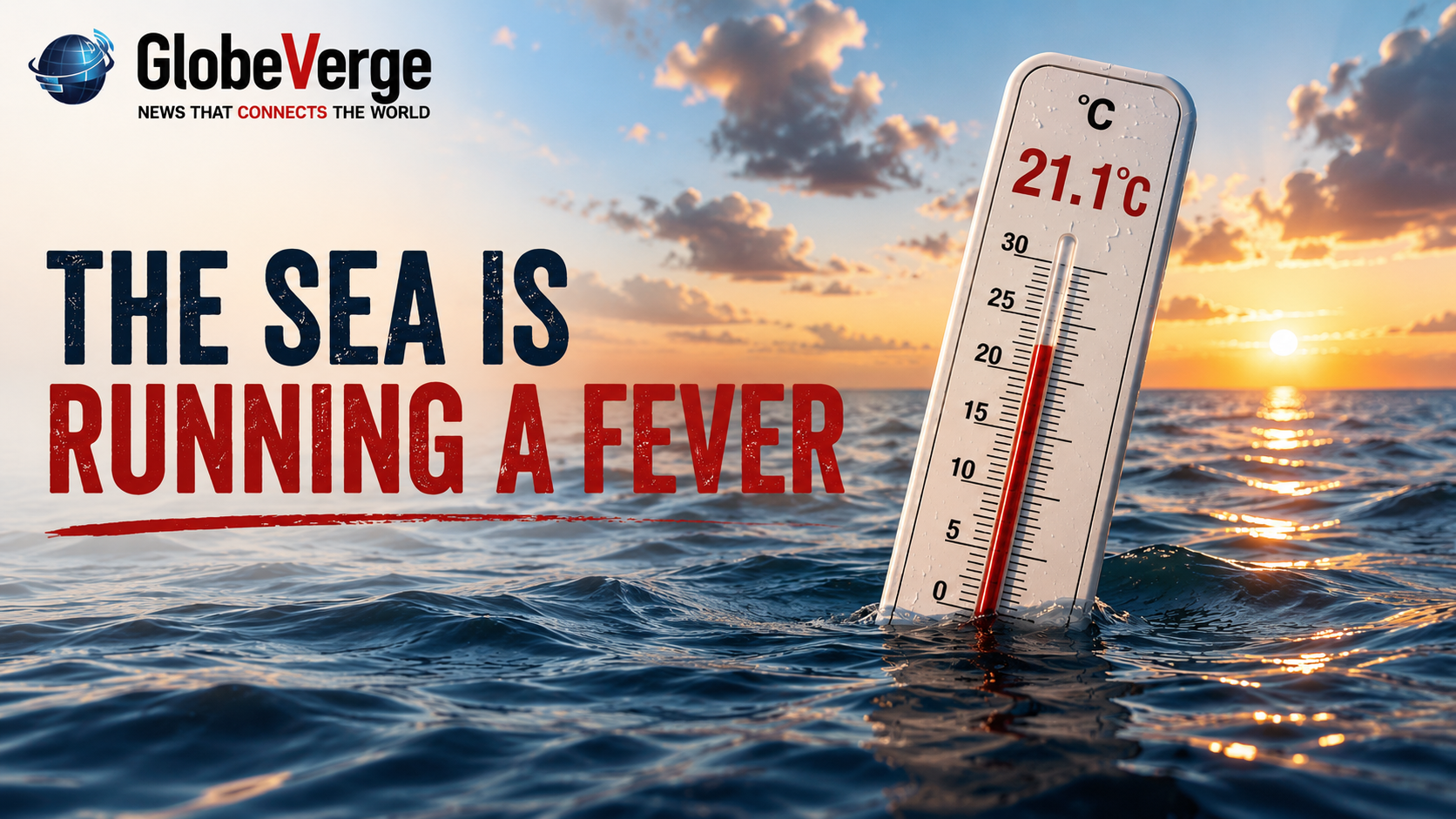
Global sea-surface temperatures have reached an average of about 21.1°C, setting a new high in the modern satellite record. But the temperature itself is only half the story.
What makes this particularly striking is when it happened.
Global ocean temperatures normally reach their annual maximum around March or April, following summer across much of the Southern Hemisphere. This time, the record has arrived in August, well outside the usual period for the global peak.
That matters because the ocean is not simply responding to the world’s weather. It helps create it.
The oceans absorb the overwhelming majority of excess heat accumulating in Earth’s climate system. That enormous reservoir of energy influences atmospheric circulation, rainfall, storms and temperatures thousands of kilometres away.
When unusually warm water spreads across large areas, the effects can travel far beyond the coastline.
A strengthening El Niño is adding another element to the situation. El Niño develops when parts of the tropical Pacific become unusually warm, disrupting atmospheric patterns and influencing weather across much of the planet.
The combination of already elevated ocean temperatures and a developing El Niño means the coming months will be watched particularly closely.
Warmer seas can provide additional energy and moisture for tropical storms. They can contribute to heavier rainfall in some regions while helping shift rainfall away from others.
Marine ecosystems feel the change as well.
Extended periods of unusually warm water can damage coral reefs, alter fish migration and disrupt fisheries that millions of people depend upon for food and income.
But this is not only a coastal story.
India’s monsoon is closely connected to conditions across surrounding oceans.
Atlantic temperatures influence hurricane development.
Pacific temperatures affect weather across Asia and the Americas.
Warm seas around Europe can interact with heatwaves and episodes of extreme rainfall.
Changes beginning in the ocean can therefore appear months later as problems involving food, agriculture, insurance, energy and infrastructure.
That is what makes the timing of this record particularly important.
A single temperature record cannot tell us exactly what weather will occur in any individual country. Nor does a warmer global ocean mean every region will simultaneously become hotter or wetter.
Weather remains complicated.
But the background conditions against which weather develops are changing.
And that creates an important question for the months ahead:
What happens when an already unusually warm ocean meets a strengthening El Niño?
Meteorologists will now watch whether the combination contributes to stronger storms, shifting rainfall patterns, prolonged heat or further marine heatwaves.
The world often experiences climate change through events on land — a flood, drought, wildfire or extreme heatwave.
But much of the energy behind those events is stored somewhere less visible.
In the ocean.
And right now, the world’s largest reservoir of heat is entering unusually warm territory at an unusually unexpected time of year.